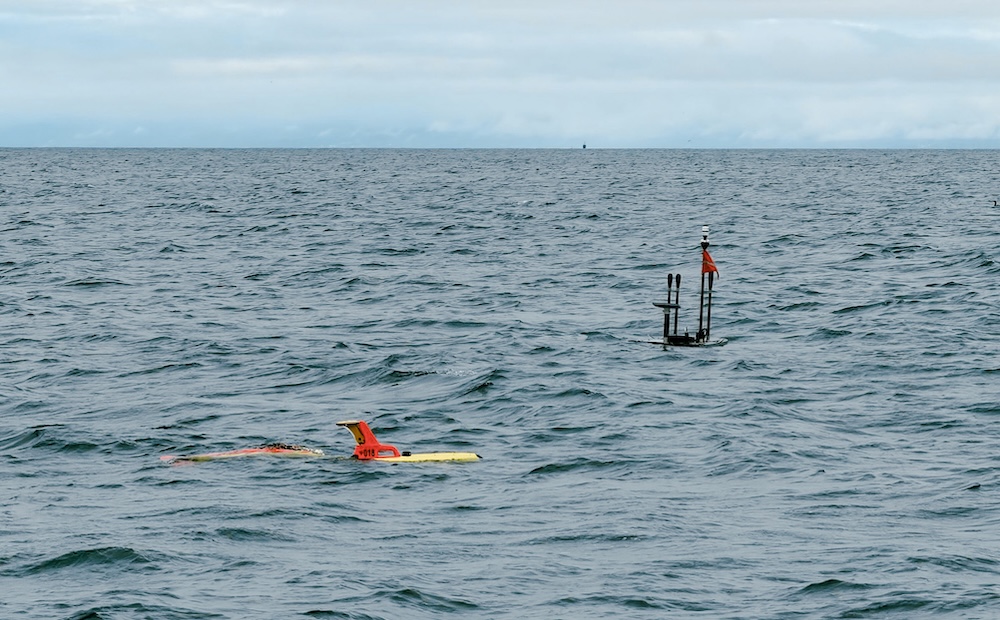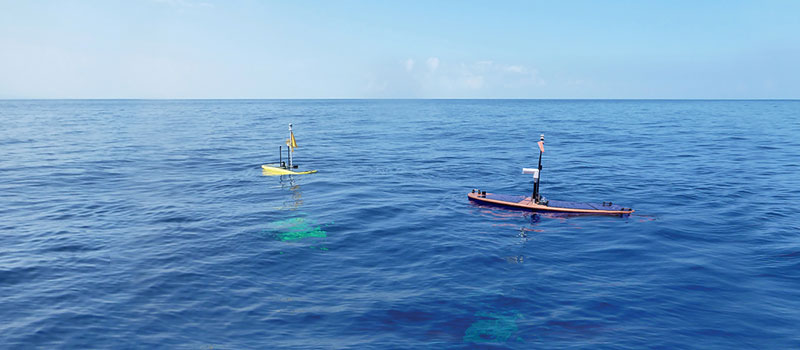
Through ten years of operations and hundreds of customer deployments, we’ve learned a lot. This year at OCEANS ‘17, our Science and Research lead Ryan Carlon presented the paper, Ten Years of Wave Glider Operations: A Persistent Effort.
In the paper, he and co-author Justin Manley explore the lessons learned over ten years of building and evolving the Wave Glider. Three primary themes emerged: technology, marine operations, and human factors. Here are some of the key lessons learned.
Technology
- Commit to product management: A Silicon Valley-style product management approach, driven by customer insights and a commitment to build and test capabilities, can advance technology development more rapidly.
- Engineer for the ocean: The harsh physical environment of the ocean presents significant engineering challenges, so prepare for continual design and manufacturing assessment and development.
Marine Operations
- Adapt to the environment, it won’t adapt to you: Understand the extremes the ocean will throw at you, and prepare to engineer to meet these challenges.
- Develop best practices for launch and recovery: An ocean robot can’t do its job until it’s in the water, so make launch and recovery as simple and infrequent as possible.
- Experiment and adapt: Learn from your customers. When a customer finds the edge of the envelope, work with them to learn what happened and expand that envelope.
Human Factors
- Make operations scale efficiently: Unmanned systems still require some human involvement, so develop best practices to help global operations scale efficiently.
- Anticipate regulation: Policy can often lag technology, but a healthy dialogue with regulators is essential in the long-term.