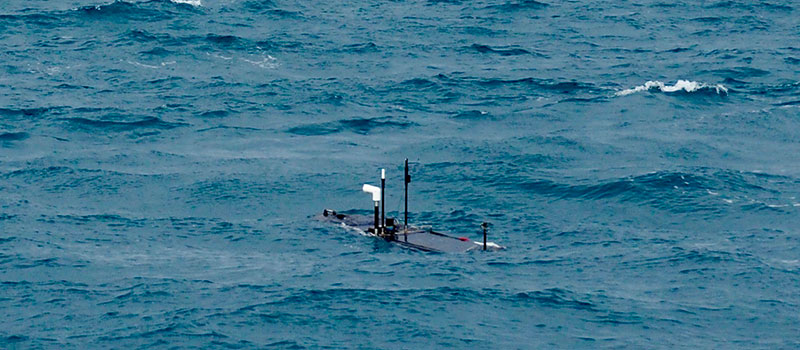
The Year in Photos – 2017
As 2017 draws to a close, we took a look back at a few of our favorite photos from throughout the year. The ocean never ceases to amaze us! The Wave Glider gets a visit from a dolphin Roger Hine was featured on a panel...

As 2017 draws to a close, we took a look back at a few of our favorite photos from throughout the year. The ocean never ceases to amaze us! The Wave Glider gets a visit from a dolphin Roger Hine was featured on a panel...
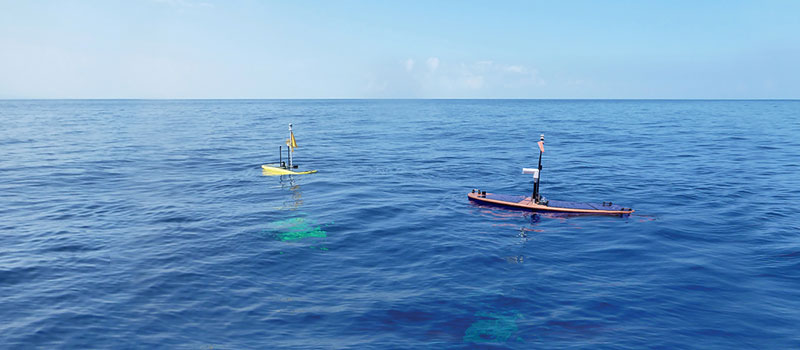
Through ten years of operations and hundreds of customer deployments, we’ve learned a lot. This year at OCEANS ‘17, our Science and Research lead Ryan Carlon presented the paper, Ten Years of Wave Glider Operations: A Persistent Effort. In the paper, he and co-author Justin...
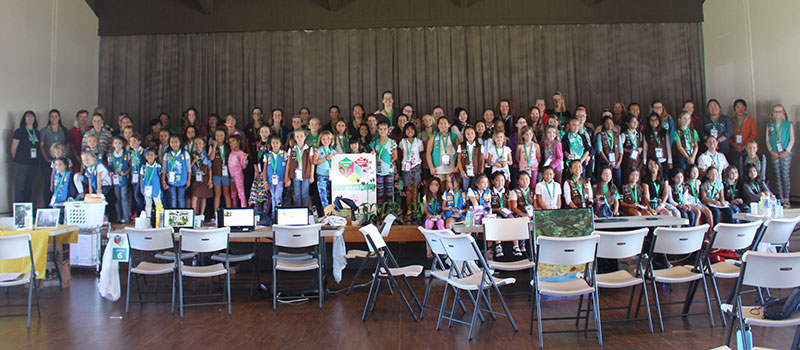
We recently joined the Girl Scouts of Hawaii for their second annual Science-Technology-Engineering-Math (STEM) Fest, held in the town of Waimea on the Island of Hawaii. Seventy-seven energetic Girl Scouts ages 8-14 attended, and several Troops were represented from all across the Island, some driving...
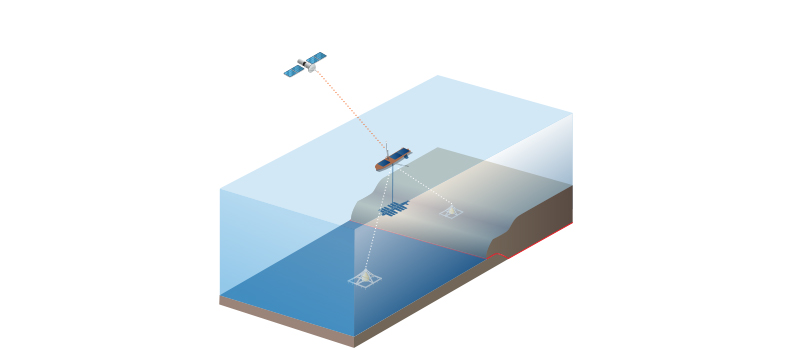
How can you measure seafloor motion with millimeter-scale accuracy through two miles of seawater? The satellite-based GPS technique used on land doesn’t work in the ocean, so we turn to GPS-Acoustics. When you combine GPS and precision acoustics, made possible by advances in sensor technology,...
It’s no secret that folks at Liquid Robotics love the ocean, and I proudly include myself as one of our robotics and ocean loving nerds. For quite a bit of my adult life I worked at sea 6-8 months a year. It was tough on...

Our company values are the foundation of the culture here at Liquid Robotics. They reflect who we are, how we work, and why we’re here. As we expand and welcome new people to the team, we wanted to make sure we had our values written...
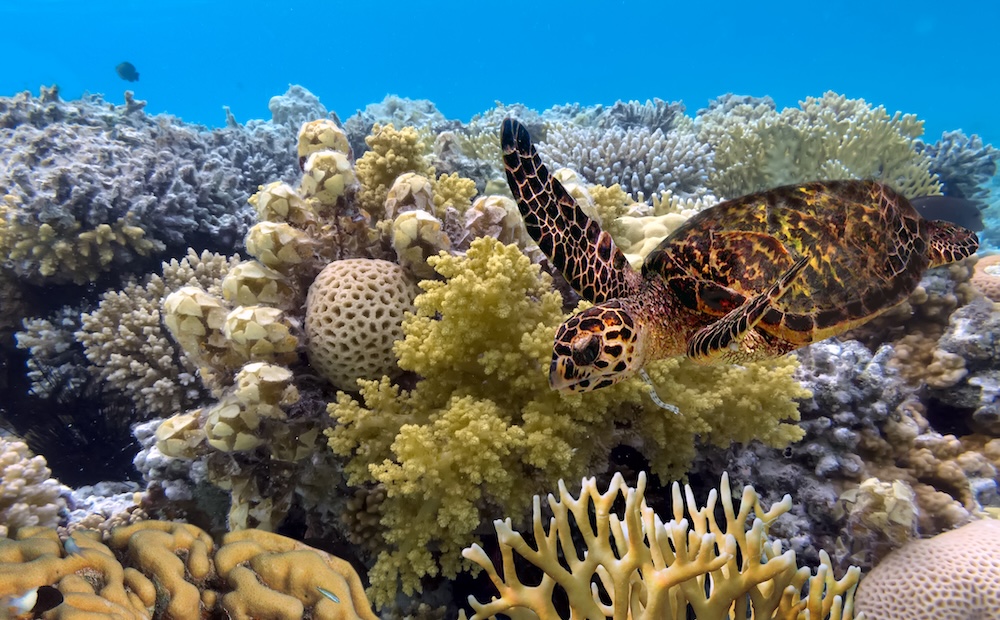
Over the past month, Liquid Robotics has been honored to join two global leaders in the fight to protect and sustainably manage our marine sanctuaries and ecosystems. In collaboration with the Australian Institute of Marine Science (AIMS) and separately with NOAA’s Office of National Marine...
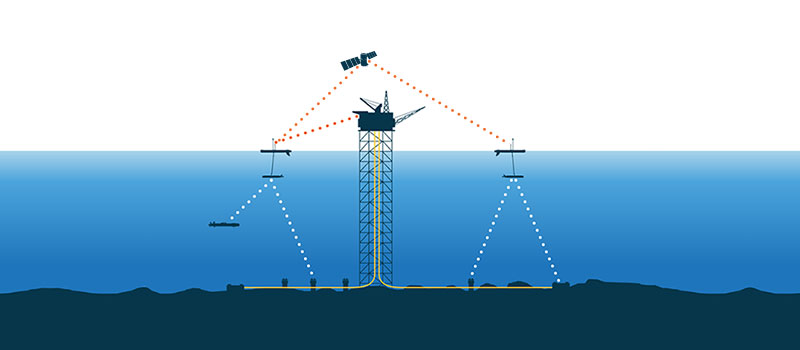
Onshore, we have shown that semi-autonomous robots have a place in industrial automation. These robots are present in automated warehouses and are generating buzz in the transportation industry. Offshore it’s a different story. It’s much harder, and much more expensive to instrument and monitor an...
Liquid Robotics and NOAA’s Office of National Marine Sanctuaries (ONMS) Pacific Islands Region (PIR) announced a multi-year agreement to develop solutions to help protect and preserve the Hawaiian and American Samoa marine sanctuaries and monuments.
In partnership with Boeing, the world’s largest aerospace company, the Australian Institute of Marine Science (AIMS) has demonstrated how a revolutionary high-tech autonomous ocean vehicle, the Wave Glider, can improve monitoring of the Great Barrier
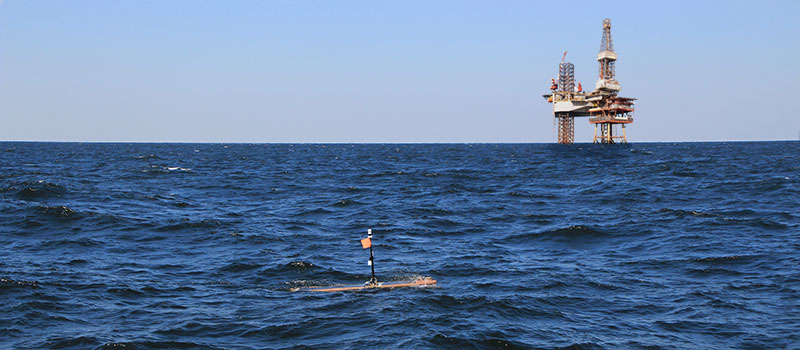
What could you do with a robot in the water 24/7? Get extreme current data in real-time, measure seafloor motion with millimeter accuracy, monitor downhole pressure and temperature during well P&A, and more. Today, the offshore energy industry faces tremendous pressure to restructure its base...
If we don’t know the ocean, we can’t measure or predict its impact on our landmass and our future prosperity. Australia has 25,000 km of coastline and 10,000 sq. km of marine territory to manage. How do you keep tabs on this vast area? Without...